[googlepdf url=”https://iis.fisipol.ugm.ac.id/wp-content/uploads/sites/720/2025/04/FR-90.pdf” download=”Download” width=”100%” height=”600″]


[googlepdf url=”https://iis.fisipol.ugm.ac.id/wp-content/uploads/sites/720/2025/04/FR-90.pdf” download=”Download” width=”100%” height=”600″]
[googlepdf url=”https://iis.fisipol.ugm.ac.id/wp-content/uploads/sites/720/2025/03/FR-89.pdf” download=”Download” width=”100%” height=”600″]
[googlepdf url=”https://iis.fisipol.ugm.ac.id/wp-content/uploads/sites/720/2025/03/FR-88.pdf” download=”Download” width=”100%” height=”600″]
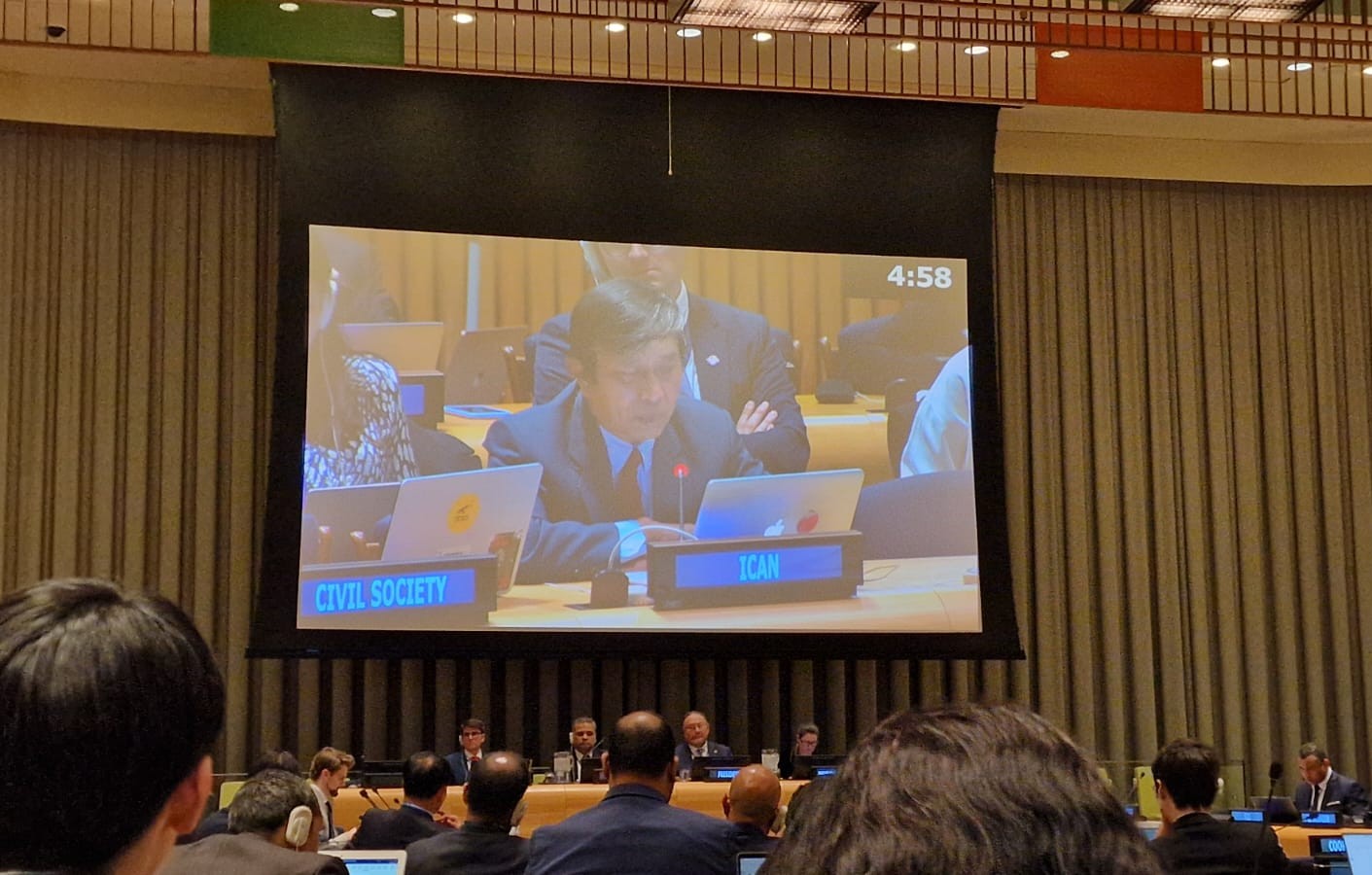
On 5th of March 2025, Mr. Muhadi Sugiono, Senior Researcher and Lead Campaigner at the Institute of International Studies, Universitas Gadjah Mada, represented ICAN in delivering a thematic statement on TPNW (Treaty on the Prohibition of Nuclear Weapons) universalisation at the TPNW Meeting of States Parties in New York. In his statement, Mr. Muhadi emphasized the need for states to accelerate their commitments toward nuclear disarmament. As nuclear risks continue to escalate, ICAN reaffirms its dedication to advocating for a world free of nuclear weapons. Below is the full statement delivered by Mr. Muhadi Sugiono:
ICAN thematic statement on universality, 3MSP, 5 March 2025
Excellencies, Distinguished Colleagues,
Each time that we meet, the TPNW community grows larger.
We take this opportunity to welcome and congratulate the four countries that have become states parties since our last meeting: Indonesia, São Tomé and Príncipe, Sierra Leone and the Solomon Islands.
We also take this opportunity to acknowledge the tremendous efforts of Kazakhstan, South Africa and Uruguay, among others, to advance universalisation of the treaty during the intersessional period.
One of the most notable initiatives in this area in 2024 was the African Conference on the Universalisation and Implementation of the TPNW in Addis Ababa, with the participation of 31 states from the region, including 22 that are not yet parties.
As South Africa said in its opening remarks to that conference, “Today, this treaty could not be more relevant given the dire state of the multilateral nuclear disarmament regime. The universalisation of the TPNW, its norms and fundamental tenets, is therefore vital.”
The African Union Commissioner for Political Affairs, Peace and Security also addressed the conference, pledging the AU Commission’s ongoing support to AU members in the universalisation of the TPNW.
Various other regional meetings were also convened in 2024 to promote universal adherence to the TPNW, including among states from the Asia-Pacific region and Central Asia, in particular.
There are currently 25 states that have signed but not yet ratified the TPNW, many of which are on track to become states parties soon. We thank those signatory states that have provided updates this week on the current status of their ratification processes.
Beyond the states that have already signed the TPNW, around 40 others have indicated their support for the treaty in the UN General Assembly. Thus, there is still great potential to achieve significant progress in the short term towards universalisation.
We once again appeal to all states parties to prioritise this work, for each new signature and ratification makes the treaty more effective and powerful. To achieve the ambitious goals set out in the Vienna Action Plan, universalisation is essential.
In this process, states parties must continue to engage and change the views of those states that do not yet support the TPNW. As the Vienna Action Plan also provides, in addition to increasing signatures and ratifications, states parties have agreed to actively promote the norms, values and underlying arguments of the Treaty.
Please consider what more your country could be doing to advance these goals, including at the highest levels of government. Greater efforts are needed not just in New York and Geneva, but also in capitals.
ICAN stands ready to assist in this work in whatever way we can. We have partners in more than one hundred countries dedicated to raising public awareness of the TPNW and its underlying humanitarian rationale.
With the Doomsday Clock ticking closer to midnight, we must approach this task with a renewed sense of urgency.
What better way for states to commemorate the 80th anniversaries of the atomic bombings of Hiroshima and Nagasaki, and of the founding of the United Nations, than by signing and ratifying the TPNW.
As our executive director noted earlier this week, exactly half of all states have now joined this landmark treaty, either as parties or signatories. We must spare no effort in bringing the other half on board.
Thank you.
[googlepdf url=”https://iis.fisipol.ugm.ac.id/wp-content/uploads/sites/720/2025/02/FR-87.pdf” download=”Download” width=”100%” height=”600″]
[googlepdf url=”https://iis.fisipol.ugm.ac.id/wp-content/uploads/sites/720/2025/02/FR-86.pdf” download=”Download” width=”100%” height=”600″]
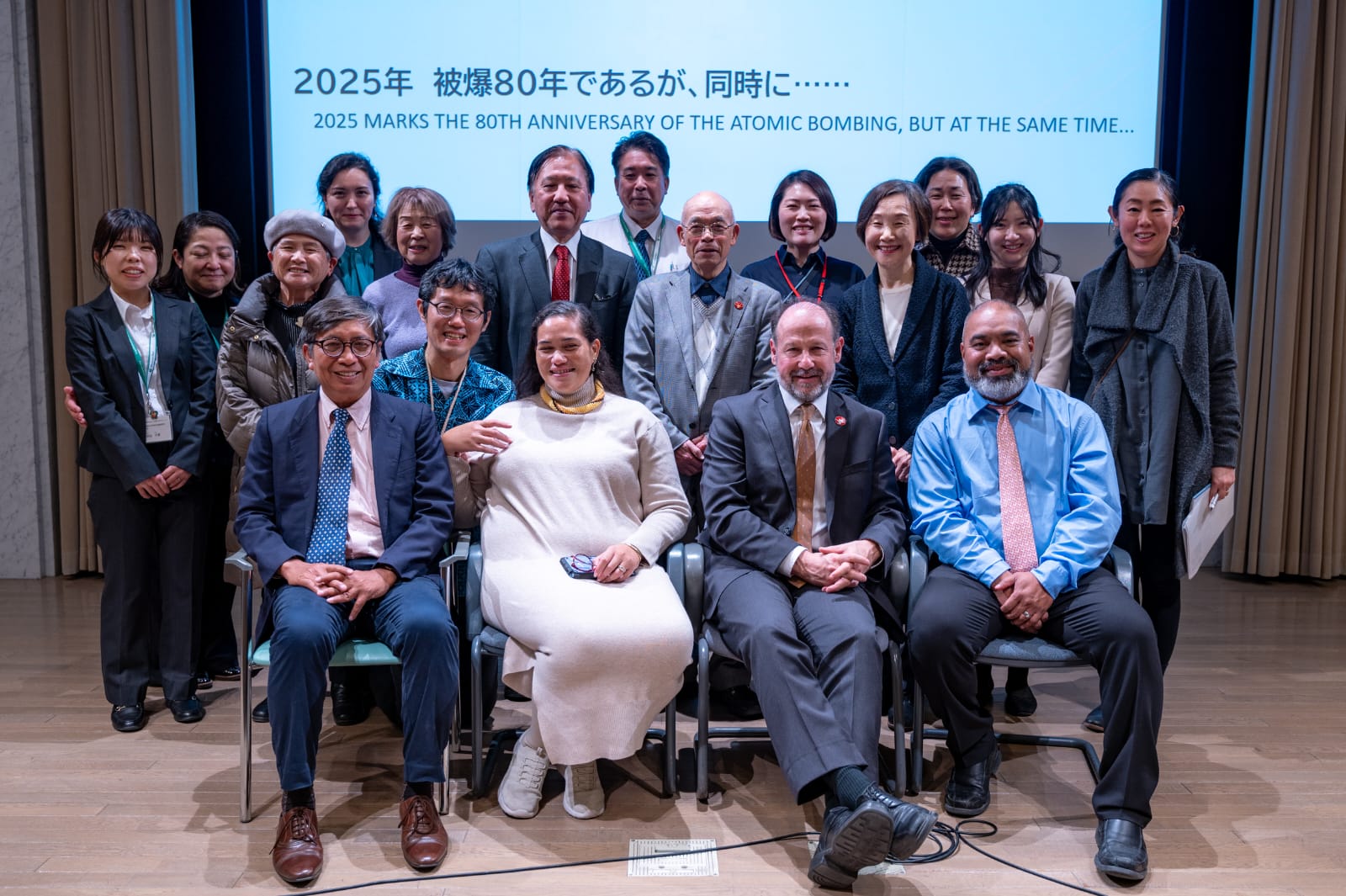
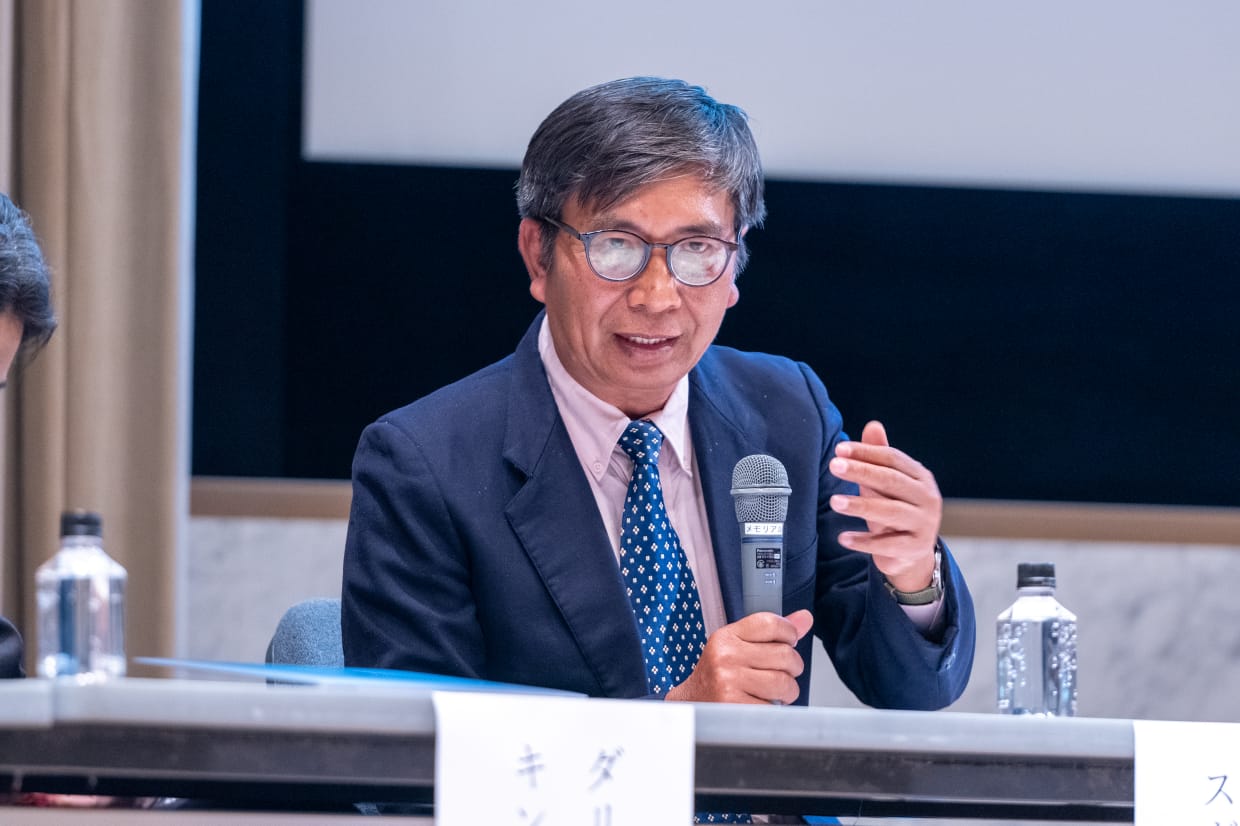
On 8-9 February 2025, Mr. Muhadi Sugiono, Senior Researcher and Lead Campaigner at the Institute of International Studies, Universitas Gadjah Mada, participated in the International Civil Society Forum to Abolish Nuclear Weapons, in Tokyo, Japan. The forum was organized to commemorate the 80th anniversary of the atomic bombings of Hiroshima and Nagasaki, bringing together global leaders, scholars, and civil society representatives to discuss nuclear disarmament efforts.
In a session titled “Promoting Nuclear Disarmament in East Asia,” Mr. Muhadi Sugiono offered his insights on the current climate of nuclear disarmament. He drew from his experience as a campaigner for the International Campaign to Abolish Nuclear Weapons (ICAN) in Indonesia, particularly in advocating for ratifying the Treaty of the Prohibition of Nuclear Weapons (TPNW). These efforts culminated in the landmark ratification of Indonesia in September 2024. On a broader scale, the Southeast Asia region has taken proactive steps to promote nuclear disarmament. This is evident in diplomatic initiatives to mitigate US-China rivalry, the establishment of the nuclear-free zone and active participation in the TPNW advocacy. Given the shifting security landscape in East Asia–marked by North Korea’s advancing nuclear and missile capabilities and China’s rapid expansion of its nuclear arsenal–this discussion remains highly relevant. Mr. Muhadi’s insights were pivotal in exploring practical steps to transform regional confrontations into cooperative efforts toward nuclear disarmament.
During the event, Tanaka Terumi, co-chairman of Nihon Hidankyo—the 2024 Nobel Peace Prize winner—delivered a speech urging the younger generations to carry on the effort of nuclear abolition. He underscored the importance of understanding the catastrophic consequences of the atomic bombings to grow a more profound awareness that such suffering must never be repeated. A document was introduced to portray the reality of the devastation caused by the atomic bombings, reinforcing the inhumanity of nuclear weapons. It serves as a call to action for the younger generation of their responsibility to continue the collaborative efforts, especially as survivors age.
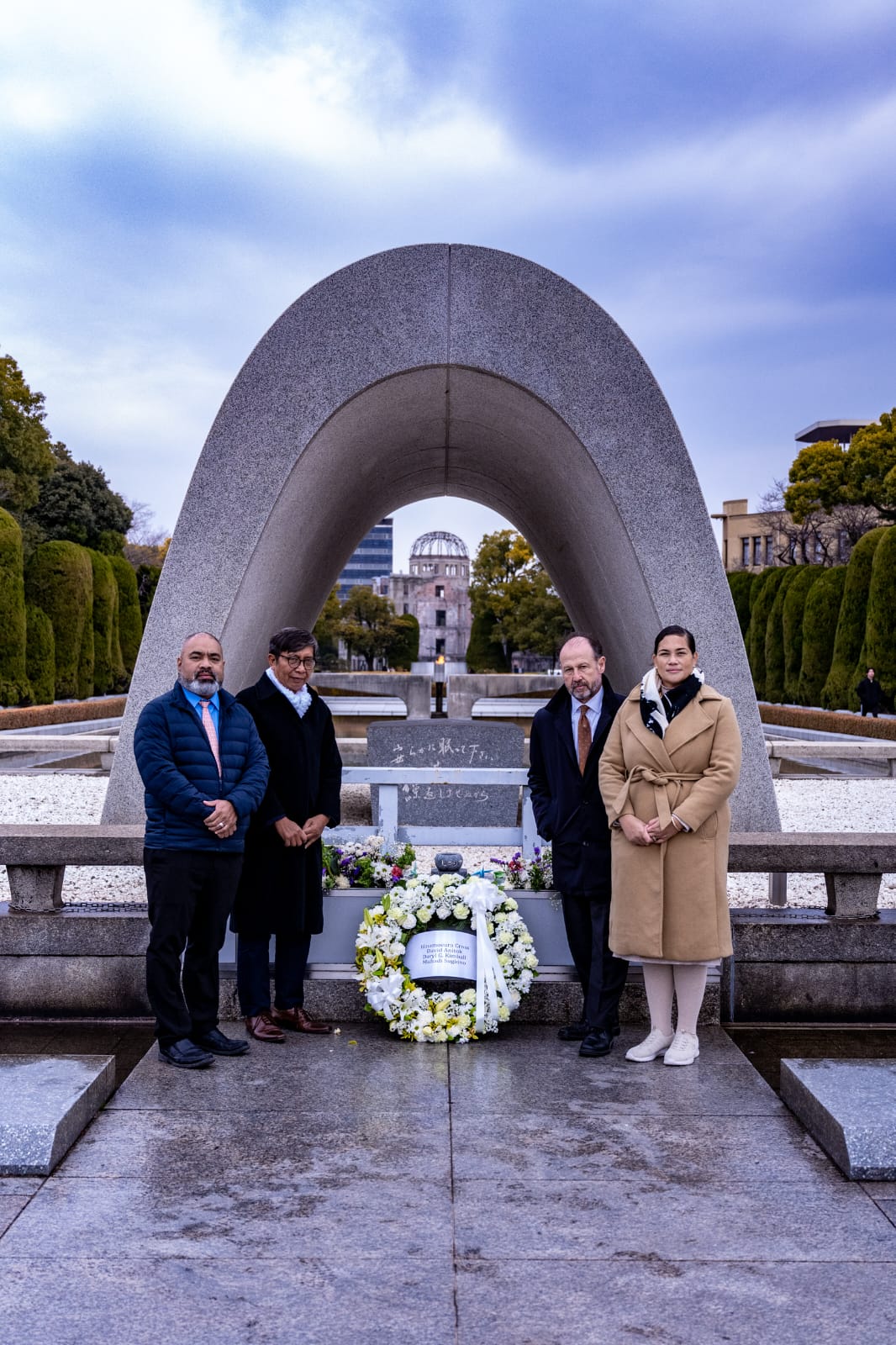
Following the forum, Mr. Muhadi Sugiono, alongside other international guests, visited Hiroshima, where they met with Mayor Matsui and Hibakusha–the survivors of the atomic bombing. On the occasion, Mayor Matsui expressed a growing desire to “enhance the momentum for abolition and rectify the situation amid increasing risks of nuclear weapons use.” They also paid tribute at the Peace Memorial Park and Museum and held a public symposium with local organizations.
The forum concluded with participants releasing proposals for the United Nations meeting of States Parties to the Treaty on the Prohibition of Nuclear Weapons, scheduled to take place in New York in March 2025. These proposals aim to reinforce international commitments to nuclear disarmament and strengthen global efforts to achieve a world free of nuclear weapons.
On this occasion, Mr. Muhadi Sugiono also had an opportunity to interview the 2024 Nobel Peace Prize winner–Nihon Hidankyo. See the full interview below:
Written by: Inggit Kartika Dini
Edited by: Nabilah Nur Abiyanti