Universitas Gadjah Mada
  • GO SOUTH
    • ABOUT GO SOUTH
    • GO SOUTH 2025
    • THE SPEAKERS
    • THE CONVENER
    • PROGRAM SCHEDULE
    • CALL FOR ABSTRACTS
  • RESEARCH
    • DEMOCRACY, CONFLICT, AND SOCIAL INCLUSION
    • FOREIGN POLICIES, EMERGING POWERS, AND REGIONAL INTERSECTIONS
    • GLOBALISATION, DEVELOPMENT, AND ENVIRONMENT
    • SECURITY AND GLOBAL GOVERNANCE
  • ADVOCACY
    • STOP KILLER ROBOTS
    • DAMAI PANGKAL DAMAI
  • PUBLICATIONS
    • BOOKS
    • BOOK REVIEW
    • BRIEF
    • COMMENTARIES
    • GLOBAL SOUTH REVIEW
    • MONTHLY REVIEW
    • MONOGRAPH SERIES
    • ANNUAL REPORT
    • PROCEEDINGS
    • OPEN SUBMISSION
  • PROGRAMS
    • PROGRAMS
    • PAST EVENTS
  • ABOUT US
    • WHO WE ARE
    • OUR TEAM
    • IIS LIBRARY
    • PARTNERS
    • VACANCY
  • CONTACT
  • Beranda
  • Publication
  • page. 17
Arsip:

Publication

IIS Fortnightly Review #6 | Edisi 16 – 30 Juni 2021

IIS Fortnightly ReviewNews Wednesday, 7 July 2021

Our sixth edition of Fortnightly Review is out now! Articles featured in this edition are:

• Jokowi Issued Presidential Decree on Ranham, Omit Past Human Rights Violations (N. Raharema)
• Democracy Day to Demand Reforms in Nigeria (D. Laras)
• Extension of G20 Debt Suspension Service Initiative (DSSI): “A Double-Edged Sword in Disguise?” (P. Ega)
• ASEAN-EU Comprehensive Air Transport Agreement (AE CATA): A Novel Regionalism Approach to Keep the Aviation Industry Afloat Amidst COVID-19 (S. Hanief)

Access the review through : https://simpan.ugm.ac.id/s/VvSg3AJCOPVs4Sf

IIS Fortnightly Review #5 | Edisi 1 – 15 Juni 2021

IIS Fortnightly ReviewNewsPublication Friday, 11 June 2021

Our fifth edition of Fortnightly Review is out now! Articles featured in this edition are:

• Colombia and Its Growing Mass Movement: “They Can’t Take It Anymore” (V. Winona)
• Why COVID-19 Vaccination in Poorer Nations Has Slowed, Posing Global Risks (S. Aryawangsa)
• How COVID-19 Pandemic Could Impede The Catch-Up of Poor Countries With Rich Ones (M. Yansverio)
• Global Nursing Shortage and Health Inequality (N. Raharema)

Our Fortnightly Review is also mobile friendly! Access the review throught : https://simpan.ugm.ac.id/s/GnuzILvb6SfY5mL

IIS Fortnightly Review #4 | Edisi 16 – 31 Mei 2021

IIS Fortnightly ReviewNewsPublication Friday, 11 June 2021

Our fourth edition of Fortnightly Review is out now! Articles featured in this edition are:

• ‘Social Media is The Mass Protest’: Solidarity with Palestinians Grows Online (M. Yansverio)
• Drown in Water, Still Die of Thirst: Jakarta’s Water Issues (R. Puspita)
• US’ Biden Administration Approved $735 Million Weapons Sale to Israel (N. Raharema)
• ‘Diggin in, Myanmar’s Military Junta Detains US Journalist’: A Sign of Government Weakness (F. Gabriel)

Access the review throug : https://simpan.ugm.ac.id/s/NXd5uTKVnbsIegU

IIS Fortnightly Review #3 | Edisi 1 – 15 Mei 2021

IIS Fortnightly ReviewNewsPublication Friday, 11 June 2021

IIS Fortnightly Review edisi 1-15 Mei 2021 dapat diunduh melalui tautan berikut : https://simpan.ugm.ac.id/s/1Y2cBVRupMdlYU3

IIS Fortnightly Review #2 | Edisi 15 – 30 April 2021

IIS Fortnightly ReviewPublication Friday, 11 June 2021

IIS Fortnightly Review edisi 15-30 April 2021 dapat diunduh melalui tautan berikut : https://simpan.ugm.ac.id/s/JxPvO0hLQShkddz

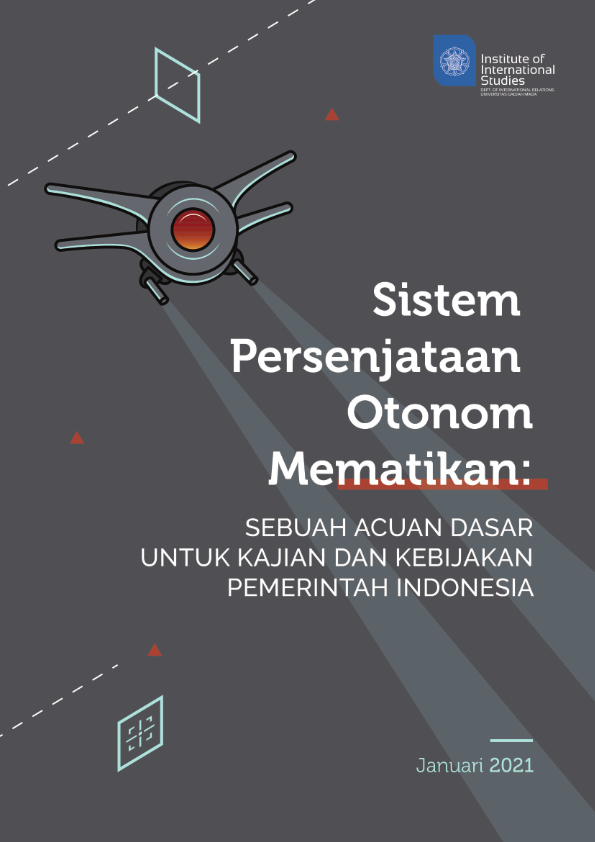
Sistem Senjata Otonom Mematikan : Sebuah Acuan Dasar Untuk Kajian Dan Kebijakan Pemerintah Indonesia

BooksNews Wednesday, 7 April 2021

[av_one_half first min_height=” vertical_alignment=’av-align-top’ space=” row_boxshadow=” row_boxshadow_color=” row_boxshadow_width=’10’ custom_margin=” margin=’0px’ mobile_breaking=” border=” border_color=” radius=’0px’ padding=’0px’ column_boxshadow=” column_boxshadow_color=” column_boxshadow_width=’10’ background=’bg_color’ background_color=” background_gradient_color1=” background_gradient_color2=” background_gradient_direction=’vertical’ src=” background_position=’top left’ background_repeat=’no-repeat’ highlight=” highlight_size=” animation=” link=” linktarget=” link_hover=” title_attr=” alt_attr=” mobile_display=” id=” custom_class=” template_class=” aria_label=” av_uid=” sc_version=’1.0′]

[av_image src=’http://iis.fisipol.ugm.ac.id/wp-content/uploads/sites/720/2021/04/Primer-Killer-Robots-IND_001.png’ attachment=’10858′ attachment_size=’full’ copyright=” caption=” styling=” align=’center’ font_size=” overlay_opacity=’0.4′ overlay_color=’#000000′ overlay_text_color=’#ffffff’ animation=’no-animation’ hover=” appearance=” link=” target=” title_attr=” alt_attr=” lazy_loading=’disabled’ id=” custom_class=” template_class=” av_element_hidden_in_editor=’0′ av_uid=’av-kn76cfdy’ sc_version=’1.0′ admin_preview_bg=”][/av_image]

[/av_one_half][av_one_half min_height=” vertical_alignment=’av-align-top’ space=” row_boxshadow=” row_boxshadow_color=” row_boxshadow_width=’10’ custom_margin=” margin=’0px’ mobile_breaking=” border=” border_color=” radius=’0px’ padding=’0px’ column_boxshadow=” column_boxshadow_color=” column_boxshadow_width=’10’ background=’bg_color’ background_color=” background_gradient_color1=” background_gradient_color2=” background_gradient_direction=’vertical’ src=” background_position=’top left’ background_repeat=’no-repeat’ highlight=” highlight_size=” animation=” link=” linktarget=” link_hover=” title_attr=” alt_attr=” mobile_display=” id=” custom_class=” template_class=” aria_label=” av_uid=” sc_version=’1.0′]

[av_image src=’http://iis.fisipol.ugm.ac.id/wp-content/uploads/sites/720/2021/04/Primer-Killer-Robots-EN_001.png’ attachment=’10862′ attachment_size=’full’ copyright=” caption=” styling=” align=’center’ font_size=” overlay_opacity=’0.4′ overlay_color=’#000000′ overlay_text_color=’#ffffff’ animation=’no-animation’ hover=” appearance=” link=” target=” title_attr=” alt_attr=” lazy_loading=’disabled’ id=” custom_class=” template_class=” av_element_hidden_in_editor=’0′ av_uid=’av-kn76clgk’ sc_version=’1.0′ admin_preview_bg=”][/av_image]

[/av_one_half][av_one_full first min_height=” vertical_alignment=’av-align-top’ space=” row_boxshadow=” row_boxshadow_color=” row_boxshadow_width=’10’ custom_margin=” margin=’0px’ mobile_breaking=” border=” border_color=” radius=’0px’ padding=’0px’ column_boxshadow=” column_boxshadow_color=” column_boxshadow_width=’10’ background=’bg_color’ background_color=” background_gradient_color1=” background_gradient_color2=” background_gradient_direction=’vertical’ src=” background_position=’top left’ background_repeat=’no-repeat’ highlight=” highlight_size=” animation=” link=” linktarget=” link_hover=” title_attr=” alt_attr=” mobile_display=” id=” custom_class=” template_class=” aria_label=” av_uid=” sc_version=’1.0′]

[av_textblock size=” av-medium-font-size=” av-small-font-size=” av-mini-font-size=” font_color=” color=” id=” custom_class=” template_class=” av_uid=’av-kn76c5bm’ sc_version=’1.0′ admin_preview_bg=”]
Klik tautan berikut untuk mengunduh file Sistem Senjata Otonom Mematikan : Sebuah Acuan Dasar Untuk Kajian Dan Kebijakan Pemerintah Indonesia [tersedia dalam versi Bahasa Indonesia dan versi Bahasa Inggris] :

http://bit.ly/PrimerKillerRobots
[/av_textblock]

[/av_one_full]

IIS Fortnightly Review #1 | Edisi 1 – 14 April 2021

IIS Fortnightly ReviewNews Friday, 2 April 2021

IIS Fortnightly Review edisi 1-14 April 2021 dapat diunduh melalui tautan berikut :

https://simpan.ugm.ac.id/s/medP14b9Mu2CGUS

It’s Time to Rethink Jakarta’s Water Governance

CommentariesNewsNews (English) Thursday, 25 March 2021

As if the COVID-19 crisis is not enough, Jakarta is now also facing another flood catastrophe. Most recently, flooding affected around 200 neighborhood units (RT) and forced more than 1,000 people to evacuate their homes.

Indonesia is currently facing a series of disasters including floods, landslides, whirlwinds and extreme droughts in some parts of the country. According to the National Disaster Mitigation Agency (BNPB), the number of disasters has nearly tripled in the past five years from around 1,664 in 2015 to 3,023 in 2020.

Of course the usual culprit of these disasters is climate change, which according to Prof. Edvin Aldrian of the Agency for the Assessment and Application of Technology (BPPT) is caused by environmental changes and degradation within and without the country.

While it is not untrue, there is more than meets the eye: it is the failure of urban water planning and governance which has contributed to Jakarta’s persistent flooding. Overlooking the root causes will not only undermine the deeper issue, but also shift the attention to quick and temporary technological fixes that only exacerbate the environmental catastrophe.

The flooding in Jakarta this year was timely as Vox, a US media outlet, published a video report on Jakarta’s environmental crisis, which has caused the city to sink as fast as 25 centimeters annually. The report associates this crisis with Dutch-inherited segregated water infrastructure, massive groundwater exploitation and rapid urban development leading to a proliferation of concrete that prevents rainwater from replenishing water lost from the city’s aquifer layers.

These issues, however, cannot be solved with simple technological fixes. Rather they require a rearrangement of water governance that has proven to have failed to provide equal and sustainable access to the city’s population.

This failure is evident in three aspects: the exclusion of the urban poor from the governance process, the blurry lines between rights and responsibilities of the stakeholders, and the elite-centric decision-making process.

In an effort to do so, we can start by rethinking our water governance approach that currently focuses on the centralized water infrastructure to also incorporate a variety of everyday water practices. These have been chosen by people either because they are excluded from the network or because their access is limited due to the weak water pressure, or the unreliable and low-quality supply of the available network.

The reality of water governance in Jakarta is not reflected in the networked infrastructure that only covers 65 percent of the population with the majority of customers coming from middle to lower income households. Considering service unreliability that is not consistent with constant tariff increases, even those who are connected also fulfill their water needs either from groundwater, rainwater harvesting or bottled water.

According to the report from Amrta Institute, more than 60 percent of the city’s water needs are fulfilled by groundwater, which serves nearly two-thirds of the city’s water consumption, or around 630 million cubic metre out of 1 billion m3/year.

Unfortunately, the discussion on Jakarta’s water governance has been biased toward the centralized infrastructure, which is problematic for three main reasons. First, it reinforces a legacy of the colonial government water development planning, which is socially and geographically fragmented. This has inherently prevented the urban poor, especially those who live in informal settlements, from both accessing the piped water infrastructure and participating in the governance process.

Second, centralized piped water infrastructure is often used as a justification for private sector participation due the government’s lack of capacity to fund capital costs. However, as evident in Jakarta, neither public nor private operators have successfully ensured adequate and sustainable water service provision for the population, even those who adhere to pro-poor initiatives.

Lastly, the focus on centralized infrastructure promotes the development of big-infrastructural projects as a band-aid for the environmental catastrophe while neglecting the underlying issue of water governance failure. For example, the construction of a USD$40 billion giant sea wall to prevent seawater from overflowing into the already sinking city does not address the underlying problems and often comes at a cost of forced eviction of many informal settlements which burdens the already excluded urban poor.

Thus, there is a need to look beyond the networked water infrastructure by considering everyday water practices in which people interact within and outside the centralized infrastructure. Such practices include buying water from neighbors, collecting water from public stand-pipes, purchasing from pushcart vendors and extracting groundwater from shallow or deep wells.

Looking at these everyday practices will allow us to unveil the different manifestations of water inequalities in terms of distribution, recognition and participation. For example, research by Kooy and Furlong in 2018 found that over-abstraction of groundwater in rich neighborhoods has led to salinization of shallow groundwater and land-subsidence in poor neighborhoods, exposing the urban poor to higher risk of flooding and poorer water quality.

Equally important, paying attention to everyday water practices will not only allow us to understand the different manifestations of urban water inequality but also enable us to capture local knowledge and practices that have been filling the gap left by the centralized water infrastructure. This will counter the disempowering image of the urban poor as a passive recipient or victim of Jakarta’s unequal water governance.

This article does not seek to diminish the importance of centralized piped water infrastructure or the urgency for people to be connected to a piped water source, instead it seeks to highlight the need to look beyond the centralized network in order to develop a more holistic understanding of Jakarta’s water governance.

Hopefully, this will lead to the creation of an inclusive and sustainable urban water governance that allows for more equitable access to water, increasing recognition and larger space for participation especially for marginalized communities including the poor in informal settlements, women, migrants and the disabled.


This article has been published by the Jakarta Post and can also be accessed via the following link: https://www.thejakartapost.com/paper/2021/02/26/its-time-to-rethink-jakartas-water-governance.html


Writer : Marwa

Editor : Angganararas Indriyosanti

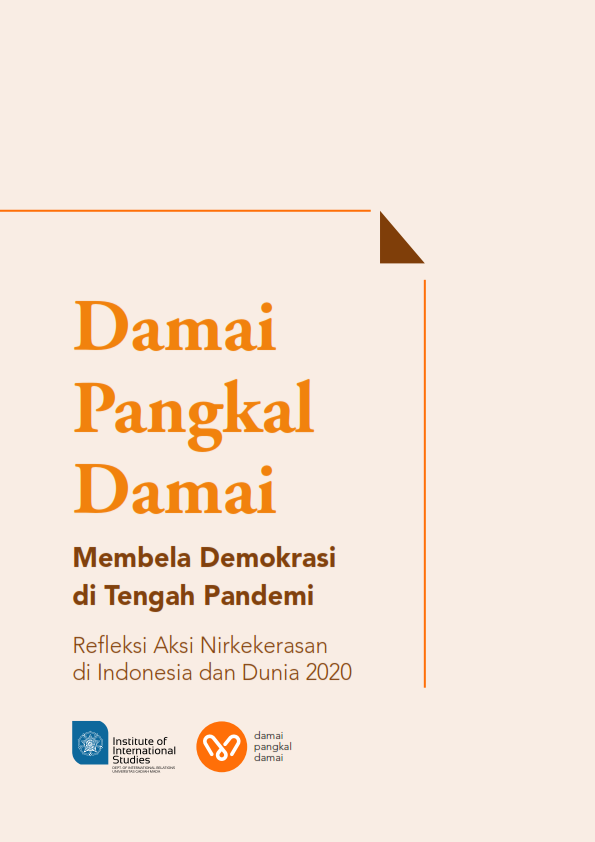
Damai Pangkal Damai : Membela Demokrasi di Tengah Pandemi – Refleksi Aksi Nirkekerasan di Indonesia dan Dunia 2020

BooksNewsPublication Friday, 19 February 2021


Klik tautan berikut untuk mengunduh file buku Damai Pangkal Damai : Membela Demokrasi di Tengah Pandemi – Refleksi Aksi Nirkekerasan di Indonesia dan Dunia 2020 [Tersedia dalam versi Bahasa Indonesia dan Bahasa Inggris] : http://bit.ly/DPDRefleksiAksiNirkekerasan

The Striking Generational Divide, Explained

CommentariesNews Monday, 8 February 2021

Generational “finger-pointing” is not a novel concept and has existed for centuries within multitude of generations, each blaming the other for issues and ideas neither generation wants to take accountability for.  Both Gen Y (people born between the years 1980-1994) and Gen Z (people born between the years 1995-2010) have formed an alliance to push back on the older generations, specifically the Baby Boomers. A clash of ideas and a point of difference of views on society has struck tension between generations, preventing a progressive society from fully forming.

The younger generation is racially diverse, environmentally and socially conscious, and have a clear vision for how they want their future to unfold (Valencia-Garcia 2020). However, it is apparent that the ideas of the younger generations contrast sharply with older generations, who tend to reject policy reforms or ideas presented by the youth. A difference in “expectations of the future, ethics and politics” (Birnstengel 2019) has formed a generational split and prevents society from progressing entirely. The generational divide is not only based on family morals and ethics but is also an accumulation of different people living fundamentally different lives and experiencing different circumstances in general. Technology and politics are two key factors that have continually evolved through generations and have influenced generation’s perspective on society deeply (Birnstengel 2019).

Today, the debate on generationalism is centered around how a nation should look and exactly what kinds of people should be a part of that nation. Millennials and Gen Z have been defined by the rise of the internet and identity politics. They grew up with the internet, but also remember a life in analogue (Frey 2020). They have experienced economic crises and watched the War on Terror unfold, and as a result are concerned for their futures due to the large influence capitalist and traditionalist institutions still have on society (Valencia-Garcia 2020). Older generations are wanting to protect these outdated institutions that uphold their own old-fashioned values in order to push their agendas on the nation. Pew Research centre research found that the upcoming younger generation was the most ethically and racially diverse generation to date, fundamentally driving their progressive attitudes (Birnstengel 2019).

A distinct issue that has caused great generational divide is the climate crisis. Younger people across the world have grown up with more exposure to the effects of climate change than the older generations (Cohen 2019). Thus, young adults in current day are of higher concern about climate change as they understand the implications better and are more educated on the topic. The attitudes of younger generations and their beliefs has pushed an agenda to resolve the climate crisis dramatically, creating very real social change that is being reflected in policy changes around the world (Cohen 2019). Although the impacts of climate change are ever present and should be dealt with immediately, the push for policy change around the environment is a reflection of the youth’s priorities for society. Along with climate change, issues such as racial justice and social inclusivity are other examples of younger generations pushing important issues.

Older generations accuse younger generations of naivety and younger generations don’t understand their parochialism. Potentially, a middle ground could be met where older generations feel their needs are being fulfilled while society continues to progress as a whole. However, generational gaps will continue to arise if unity is not formed or perceptions do not alter to accommodate for one another


REFERENCES:

Birnstengel, G 2019, Boomer Blaming, Finger Pointing and The Generational Divide, Forbes, retrieved February 2 2021

Cohen, S 2019, The Age Gap in Environmental Politics, Earth Institute, Columbia University, retrieved February 2 2021

Frey, W 2020, The 2020s can end America’s generational divide in politics, Brookings, retrieved February 2 2021

Valencia-Garcia, L 2020, Understanding Today’s Generational Divide, Fair Observer, retrieved February 2 2021


Writer : Emily Camilleri

Editor : Angganararas Indriyosanti

1…1516171819…34
Universitas Gadjah Mada

Faculty of Social and Political Sciences
Universitas Gadjah Mada
Jl. Sosio-Justisia No.1 Bulaksumur
Yogyakarta 55281, Indonesia

Phone:
+62-274-563362 Ext. 115

E-Mail:
iis.fisipol@ugm.ac.id

© Universitas Gadjah Mada

KEBIJAKAN PRIVASI/PRIVACY POLICY